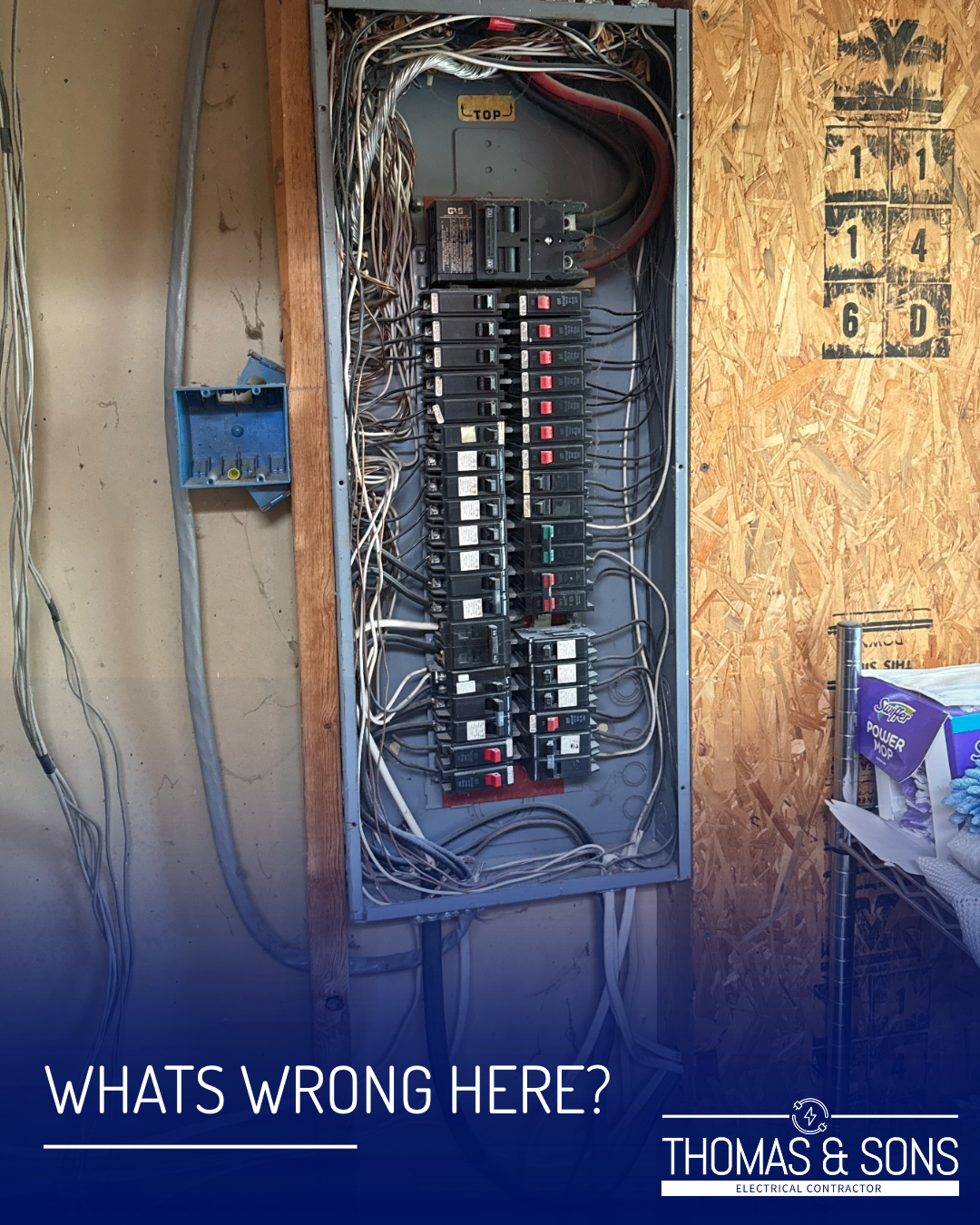
Is My Electrical Panel Safe? Warning Signs, Problem Brands, and When to Call an Electrician
Your electrical panel does more than send power around your home. The breakers inside are safety devices. Their job is to cut power when a circuit overloads or shorts. When they work, you never notice them. When they do not, wiring can overheat, and fire becomes possible.
Most homeowners never look at their panel until something goes wrong. The good news is that you do not have to guess. A few clear signs, plus the brand and age of your panel, can tell you a lot. This guide walks you through what to look for, which panels have documented problems, and when it makes sense to call a licensed electrician.
Key Takeaways
Breakers that trip often, or will not stay on, can point to an overloaded circuit or a worn breaker.
A burning smell, buzzing, scorch marks, rust, or warm spots on the panel are signs to call a licensed electrician.
Four panel and breaker brands have documented concerns: Federal Pacific Stab-Lok, Zinsco (Sylvania-Zinsco), certain Challenger GFCI breakers, and certain Siemens and Murray breakers.
Your panel does not have to be recalled to deserve attention. Age, condition, and past changes all matter.
A panel can keep supplying power and still have a breaker that will not trip when it needs to.
A professional evaluation looks inside the panel, where most problems hide.
Warning Signs Your Panel Needs a Closer Look
Most panel problems start small. A smell you notice once. A breaker you reset and forget about. These signs are easy to brush off, but they are worth paying attention to.
What You Can Smell, Hear, and See
Start with your senses. A burning smell near the breaker box is never normal. It can mean wiring or insulation is overheating. A buzzing or crackling sound from the panel is also a sign that something is not right.
Next, look at the panel itself. Watch for:
Scorch marks or dark discoloration on or around the box
Rust or moisture inside or on the panel
A panel door or breakers that feel warm when the house is not using much power
If you notice any of these, call a licensed electrician. Do not open the panel cover yourself. The parts behind it stay live even when breakers are off. The Electrical Safety Foundation International lists these same signs in its home wiring safety tips.
Breakers That Trip, or Do Not
A breaker trips when a circuit pulls more current than it should. That is its job. One trip after running the space heater and the microwave at once is not a crisis.
A pattern is different. If the same breaker trips again and again, the circuit may be overloaded. The breaker itself may also be worn out. Breakers that will not reset, or will not stay on, need a licensed electrician to take a look. Our electrical repair and maintenance service starts by finding the cause.
Here is the part most homeowners do not know. A breaker that fails to trip is more dangerous than one that trips too often. If a breaker does not cut power during an overload, the wire keeps heating up. You will not see it happen. That is why the brand and condition of your breakers matter, even when everything seems to work fine.
If your breakers are giving you trouble, our panel repair and replacement service starts with finding the cause. We will tell you if it needs a simple repair or a larger upgrade.
Do You Have One of These Electrical Panels?
Some older panels and breakers have documented performance concerns, recalls, or are hard to service today. If your home has one of the four below, it is worth a professional evaluation, even if nothing seems wrong. Open your panel door and look for the brand name on the door, the label, or the breakers.
Federal Pacific Electric (FPE) Stab-Lok
The U.S. Consumer Product Safety Commission (CPSC) investigated FPE Stab-Lok residential breakers from 1980 to 1983. The concern was whether the breakers met UL requirements. CPSC testing found that certain breakers did not meet UL calibration requirements, including tests for tripping during an overload. CPSC closed the investigation in 1983 without a recall. You can read the CPSC statement on FPE circuit breakers.
Because of these concerns, we recommend a professional evaluation and replacement of Federal Pacific Stab-Lok equipment.
Zinsco (Sylvania-Zinsco)
Zinsco panels are known for a distinctive breaker and bus design. Reported problems include breaker failures, overheating, and connection problems. These panels are now decades old, and replacement breakers are hard to find.
There is no blanket CPSC recall on Zinsco panels. Instead, we recommend evaluating each one based on its age, condition, the condition of the breakers and bus bars, and any signs of overheating.
Challenger (Certain GFCI Breakers)
In 1988, Challenger voluntarily offered to replace about 9,000 specific GFCI breakers, model types HAGF-15 and HAGF-20. A part inside could come loose and stop the ground-fault protection from working. The program covered only breakers made between February 22, 1988 and April 29, 1988. The normal breaker functions were not affected. See the CPSC notice on Challenger GFCI breakers.
We recommend a professional evaluation of older Challenger panels and breakers.
Siemens and Murray (Certain Models and Date Codes)
In 2010, Siemens recalled about 2.2 million Siemens and Murray circuit breakers, load centers, and meter combinations. A spring clip in the breaker could break. That can lead to a poor connection, high heat, arcing, and possible fire. The recall covers only certain models and date codes, not every Murray panel or breaker. See the CPSC recall notice for Siemens and Murray breakers.
We recommend a professional evaluation to find out if your equipment is affected and to check its overall condition.
Your Panel Does Not Have to Be Recalled to Deserve Attention
A recall is one piece of the story. Age, manufacturer, model, condition, and past changes all matter. So does whether parts are still available.
Having power also does not tell the whole story. A panel can keep supplying electricity even when its parts are aging or damaged. The real test of a breaker comes when something goes wrong and it needs to cut the power.
If we find older or problem equipment in your home, we will show you what we found. We will explain the documented concerns and walk you through your options. You can also read about a recent panel upgrade and our homeowner tips to see what the process looks like.
What a Professional Panel Evaluation Covers
A panel evaluation is more than a quick look at the door. A licensed electrician removes the cover and checks the parts you cannot see from outside.
During an evaluation, your electrician will check:
Brand and model: whether your panel or breakers match a known recall or documented concern
Breaker condition: signs of wear, damage, or breakers that do not seat firmly
Breaker and wire sizing: each breaker must match the wire and equipment on its circuit
Connections: loose or overheated wires, and double-tapped breakers (two wires on a terminal built for one)
Bus bars and insulation: discoloration or heat damage
Grounding and bonding: whether the panel is properly grounded and bonded
Moisture and pests: rust, water, or damage inside the box
Labeling: whether circuits are clearly marked
Many homeowners are surprised by what turns up. Work done the wrong way years ago can still create risk today. Electrical safety and code compliance go hand in hand, and a good evaluation gives you a clear picture of where things stand.
One note on terms. Our evaluation is a licensed contractor's assessment. It is not the same as an official inspection by your local building department. When a permit is needed for repair or replacement work, we handle that process for you.
Every on-site consultation with Thomas & Sons includes our complimentary 30-point electrical safety survey. It covers your panel and other key parts of your home's electrical system. You get the full picture, not just part of it.
Frequently Asked Questions
How do I know if my electrical panel is dangerous?
Watch for breakers that trip often, burning smells, buzzing, scorch marks, rust, or warm spots on the panel. Also check the brand. Federal Pacific Stab-Lok, Zinsco, certain Challenger GFCI breakers, and certain Siemens and Murray breakers all have documented concerns. If you see any warning signs or one of these brands, schedule an evaluation with a licensed electrician.
Can a panel look fine and still be unsafe?
Yes. A panel can keep supplying power while a breaker inside will not trip when it should. Loose connections and heat damage on the bus bars also hide behind the cover. That is why a professional evaluation matters, even when nothing seems wrong.
My panel was never recalled. Is it safe?
Not necessarily. A recall is only one piece of the story. Age, condition, past changes, and whether parts are still available all matter. Zinsco panels, for example, have no blanket recall but still have reported reliability concerns.
How do I know if my Siemens or Murray breakers are part of the recall?
The 2010 recall covers only certain models and date codes. The date code and catalog number are printed on a label on the side of the breaker, so the panel cover has to come off to check. A licensed electrician can do this safely and tell you if your equipment is affected.
How often should I have my electrical panel checked?
There is no set schedule for every home. Have your panel evaluated if you notice warning signs, when you buy an older home, after major electrical work, or before adding a big load like an EV charger or hot tub.
What is a double-tapped breaker, and is it dangerous?
A double-tapped breaker has two wires connected to a terminal built for one. Most breakers are not designed for this. It can cause loose connections, overheating, and breaker failure. Unless the breaker is listed and rated for two wires, it can violate code and create a safety hazard.
Does homeowner's insurance cover electrical panel problems?
It depends on your policy. Many policies cover sudden and accidental damage but not wear and tear. Some insurers may ask for a panel replacement before they write or renew a policy on a home with certain older panels. Check with your insurance provider for the details of your coverage.
Know What Is in Your Home
You do not have to guess about your panel. The right information helps you make the right decision for your home and family.
A licensed Thomas & Sons electrician will open your panel, check what is there, and explain what we find in plain language. We use flat-rate pricing, so you get one clear, upfront price before any work begins. No pressure and no surprises.
Call 980-236-1675 or visit thomasandsonsec.com to schedule your on-site consultation.

